September 30th, 2026, Denver CO
Denver is at a crossroads
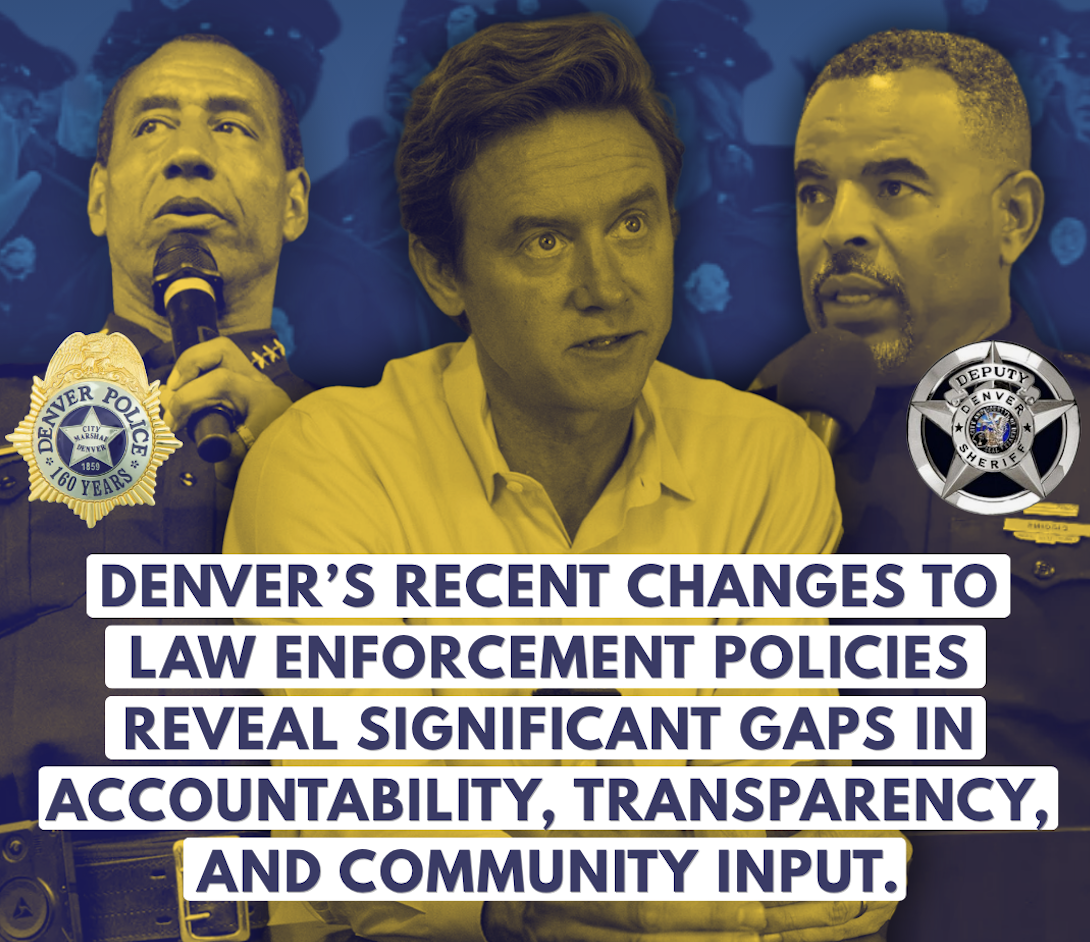
Denver’s system of independent civilian oversight of police and sheriff deputies is under attack, and it’s happening quietly, through internal policies most residents will never read.
On September 9, 2026, Denver Justice Project and our law enforcement accountability coalition partners sent a letter to Mayor Mike Johnston raising the alarm. Two recent changes, one at the Denver Police Department and one at the Denver Sheriff Department, shift the power to handle misconduct away from independent watchdogs and back into the hands of the agencies being watched.
We’ve seen what happens when law enforcement polices itself. Denver’s community fought for decades to build something better, and we’re not willing to let it slip away.
Oversight Denver fought for
Denver’s oversight system didn’t appear out of nowhere. The Office of the Independent Monitor (OIM) was created after public uprisings over police killings that led to lawsuits against the city. The Citizen Oversight Board (COB), created in 2004, is made up of nine community members who assess how well that system is working.
The OIM’s job is to monitor internal affairs investigations of police officers and sheriff deputies, recommend findings and discipline, and publicly report on patterns of complaints. Alongside it, community stakeholders came together to build the Use of Force Policy and the Discipline Matrix.
And every time Denver voters have been asked, they’ve chosen to make oversight stronger. In 2021, over 70% of voters approved a charter change giving the COB the power to appoint the Independent Monitor. That’s a clear public mandate for transparency and accountability.
What’s changing
Three changes are moving Denver backward.
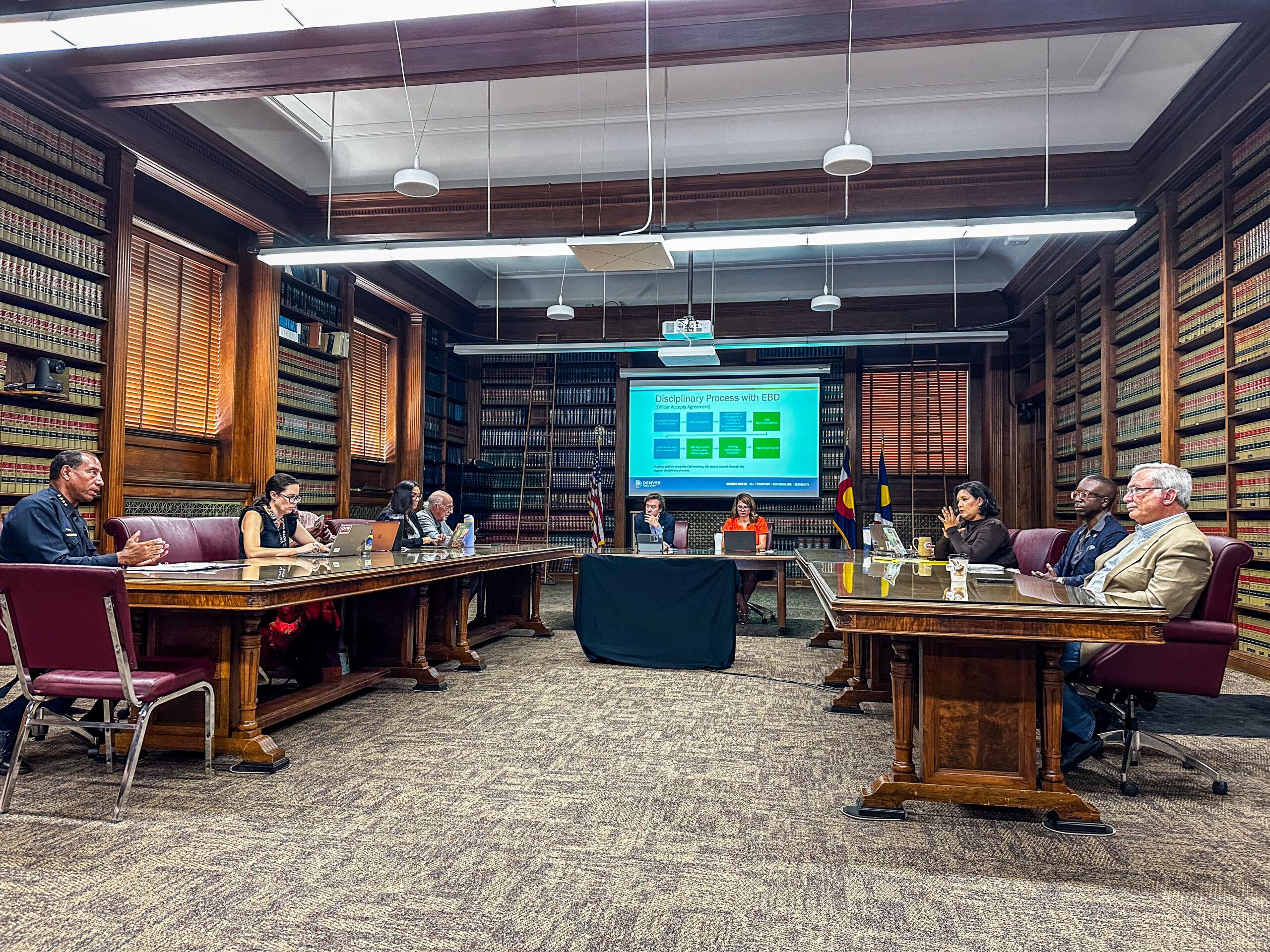
Denver Police’s “Education-Based Development” policy. DPD’s new EBD policy creates an alternative track for handling officer misconduct. Since 2025, DPD has been rolling out EBD, which lets some misconduct cases be resolved through training and coaching instead of formal discipline. Denver’s rules already allow training as part of discipline. The concern is that EBD replaces accountability with an internal process that shrinks the disciplinary record oversight bodies can see. The proposal was first shown to a small group of community members without the OIM or COB, and the OIM received the draft shortly before rollout. Los Angeles County offers a warning: under its similar program, 23 of 27 deputies found to have used unreasonable force were eligible to work off their discipline through education. Despite calls from the OIM, COB, and community to pause it, Denver’s EBD pilot took effect in June 2026.
Changes to DPD’s Taser policy. On April 14, 2026, DPD lowered the threshold for using a Taser from “active aggression” to “defensive resistance.” The OIM found that officers had previously received significant discipline for Taser use that the new rule would have allowed, and warned the change could increase harm to community members. DPD put the policy in place more than a week before the OIM’s own deadline for recommendations. Most of the 23 cities the OIM reviewed set a higher bar. After pushback from the OIM, COB, and community, DPD pulled the policy back.
Directive 2026-001 and the Sheriff Department’s internal discipline. This directive from the Executive Director of Safety governs how the Denver Sheriff Department handles discipline. Implemented on May 27, 2026, it sends 19 categories of Sheriff Department violations directly to supervisors instead of the standard administrative-investigation process. The OIM, COB, and community had no chance to weigh in beforehand. Key terms like “harm” and “incident” were left undefined, and the OIM couldn’t access Workday, the system used to run the new process. The Sheriff cited staffing shortages, overtime, and morale, but the evidence relied largely on feedback from just five employee groups, and Executive Director Gardner acknowledged there was no single compiled record of the analysis behind it.
After sustained pushback from the OIM, the COB, community organizations, and Denver residents, the Department of Public Safety paused Directive 2026-001 for 120 days on August 7, 2026. We appreciate that. But a pause only matters if it’s used for real examination and community dialogue, not to delay a decision that’s already been made.
Why this matters
These policies look different on paper, but they move in the same direction. Each one creates a separate process for handling misconduct that reduces independent oversight and gives more discretion to the very agencies being overseen.
That’s the core problem. Independent oversight exists because people harmed by police and jail staff deserve a process that isn’t controlled by the people who harmed them. When misconduct gets handled internally, behind closed doors, the public loses the ability to see what happened and whether anyone was held accountable.
These changes also bypass the people of Denver. Our oversight system was built through decades of community advocacy, public leadership, and votes at the ballot box. Any change to it should go through that same community, not around it.
What we’re fighting for
The root problem is simple: the OIM can review and recommend changes to policies on discipline and use of force, but it can’t stop them from taking effect. Under current city law, D.R.M.C. § 2-390(d), departments only have to give the OIM “reasonable notice and an opportunity to make recommendations.” In all three cases above, oversight came after the fact.
DJP is calling on the City to amend § 2-390 so independent review happens before a policy takes effect, not after the harm is done:
- A mandatory 120-day review. Any proposed change affecting discipline, misconduct investigations, complaint handling, or use of force goes to the OIM at least 120 days before it’s implemented.
- Complete information up front. The 120 days don’t start until the OIM has the full policy, the data and analysis behind it, and the implementation plan.
- OIM approval or veto. At the end of the review, the OIM can approve the policy or issue a written veto explaining its concerns. A vetoed policy can’t move forward unless it’s substantially revised and resubmitted.
- An emergency exception. Changes required immediately by law can still happen, with the OIM notified as soon as possible.
We’re also open to added safeguards, like requiring both the OIM and the COB to veto before a policy is blocked, or letting City Council override a veto with a two-thirds vote.
This isn’t a radical idea. Chicago, Cleveland, and Oakland already give civilian oversight bodies binding authority over police policy. Oakland’s Police Commission, for example, has 120 days to approve or reject proposed changes to use-of-force policy.
Strong oversight also protects taxpayers. Denver has paid more than $30 million in police settlements since 2020, including about $19 million in 2023 alone. Yet the OIM’s 2026 budget was cut by $150,000, an approved deputy monitor position was eliminated, and the COB has four vacant seats.
We’ll keep attending COB and OIM meetings, following proposed ordinance changes closely, and working with our allies on City Council to get these protections written into law.
We’ve been at the table all year
Since April 2026, DJP has taken part in 22 meetings and public forums on independent oversight and policing in Denver. We’ve shown up consistently because protecting oversight takes sustained pressure, not a single letter.
- 10 meetings with the Citizen Oversight Board and the Office of the Independent Monitor, including sessions with COB leadership, Independent Monitor Elisabeth Perez Castle, former Independent Monitor Nick Mitchell, Sheriff Diggins, and Executive Director of Safety Al Gardner. One COB meeting in May focused specifically on the Police Department’s EBD policy.
- 5 oversight coalition meetings with partners including the Denver Task Force, ACLU of Colorado and Together Colorado, where we built the strategy behind our letter to Mayor Johnston.
- 5 public forums and community events, including the release of the OIM’s 2025 annual report, two OIM and COB community forums, and three public safety forums with Denver’s police, sheriff, and safety leadership.
- 2 meetings with city leaders on proposed ordinance changes to the OIM, including one with Councilmember Shontel Lewis’s office.
At our most recent coalition meeting on September 30, each partner organization committed to reaching out to City Council members for updates on the proposed ordinance changes. We’re also planning a public forum, and we’ll share details soon.
What you can do
We have a real opportunity to strengthen independent oversight of Denver Police and the Denver Sheriff Department. If we stay quiet, we risk losing years of hard-won progress.
- Read our coalition letter to Mayor Johnston: read the full letter.
- Read our case report on why we support strengthening oversight: read the case report.
- Contact Mayor Johnston and your City Council member. Tell them to protect the OIM and COB, and to make sure any changes to police and sheriff discipline go through real community input.
- Show up. The next Community Oversight Board meeting is Friday October 23rd: register here
- Get involved with DJP. Sign up to volunteer or donate to support this work.
Denver voters have said it again and again: we want accountability we can see. Let’s make sure city leaders hear us.