October 7th, 2026, Denver CO
Proposition 132 is on your ballot this year. It claims to fight the fentanyl crisis, but what it actually does is send more people to prison for longer. Denver Justice Project urges every voter to vote NO and return your ballot by Tuesday, November 3.
Our communities are grieving loved ones lost to overdose. That pain is real, and it deserves real solutions. Prop 132 is not one. It repackages the failed War on Drugs and calls it public safety.
What Prop 132 would do
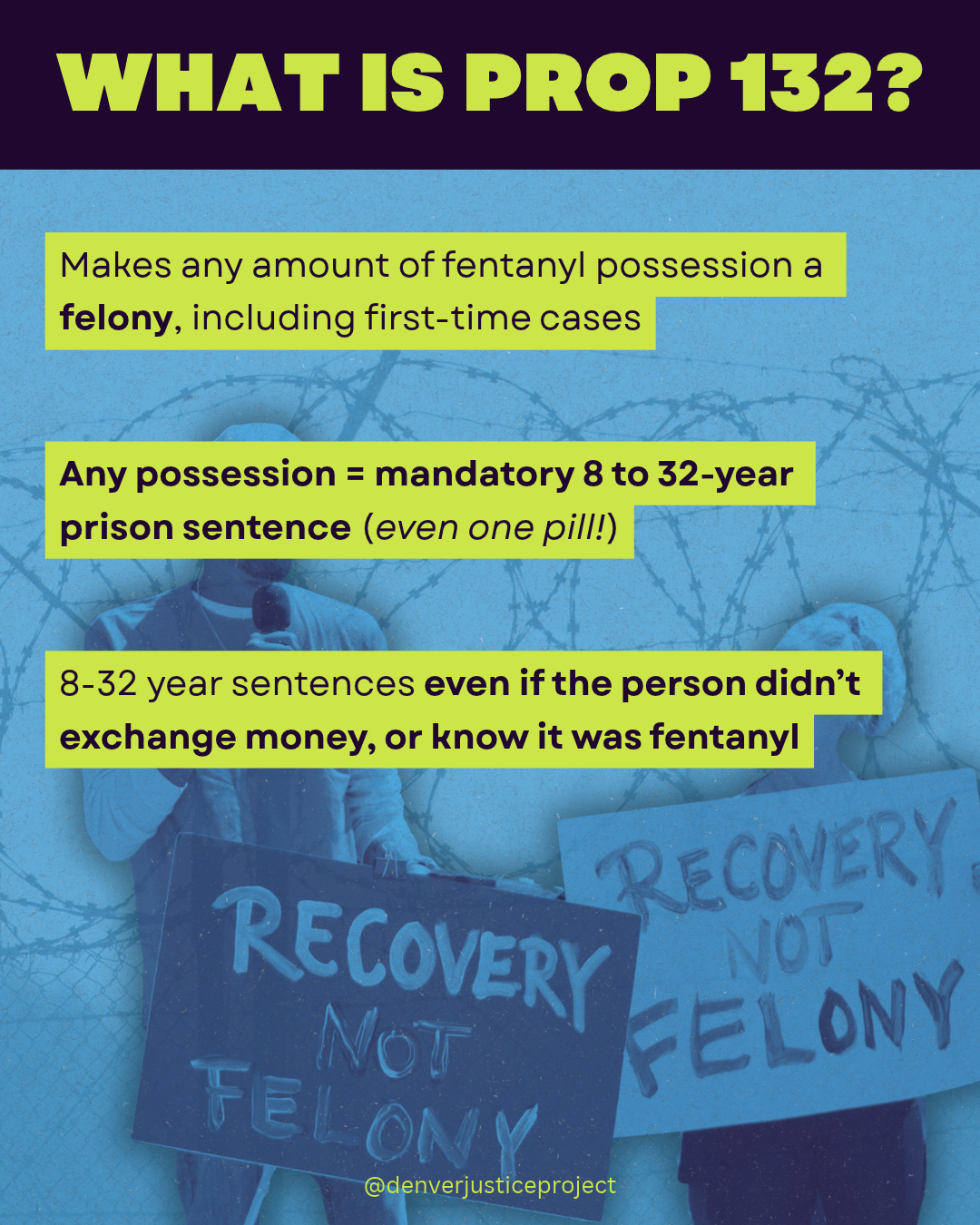
- Makes possession of any amount of fentanyl a felony, even for a first-time case. Today, minor possession is a misdemeanor.
- Requires a mandatory minimum of 8 years in prison for distributing any amount of fentanyl. Under the measure, sharing a single pill with a friend could count, even if no money changed hands or the person didn’t know it was fentanyl.
- Takes away judges’ options to reduce penalties for certain possession and distribution charges.
- Narrows Good Samaritan protections, which help keep people from being charged when they call 911 to report an overdose.
If it passes, Prop 132 would take effect on January 1, 2027.
It will cost lives and money
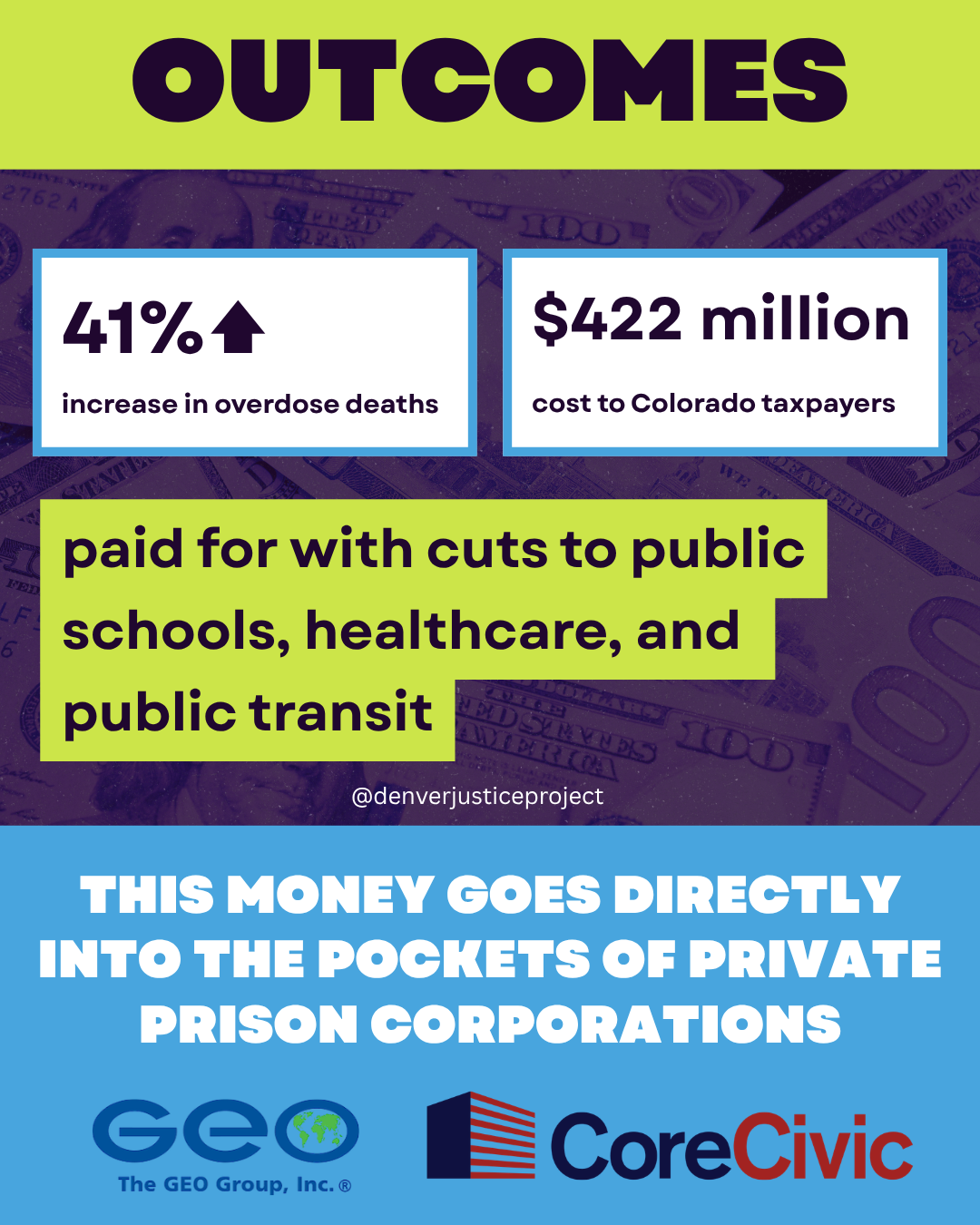
More overdose deaths, not fewer. Researchers at the CORxConsortium project that Prop 132 could increase overdose deaths in Colorado by 41%. When using drugs means risking a felony, people use alone, hide from help, and stay away from treatment. Weakening Good Samaritan protections means more people will be afraid to call 911 when a friend is dying.
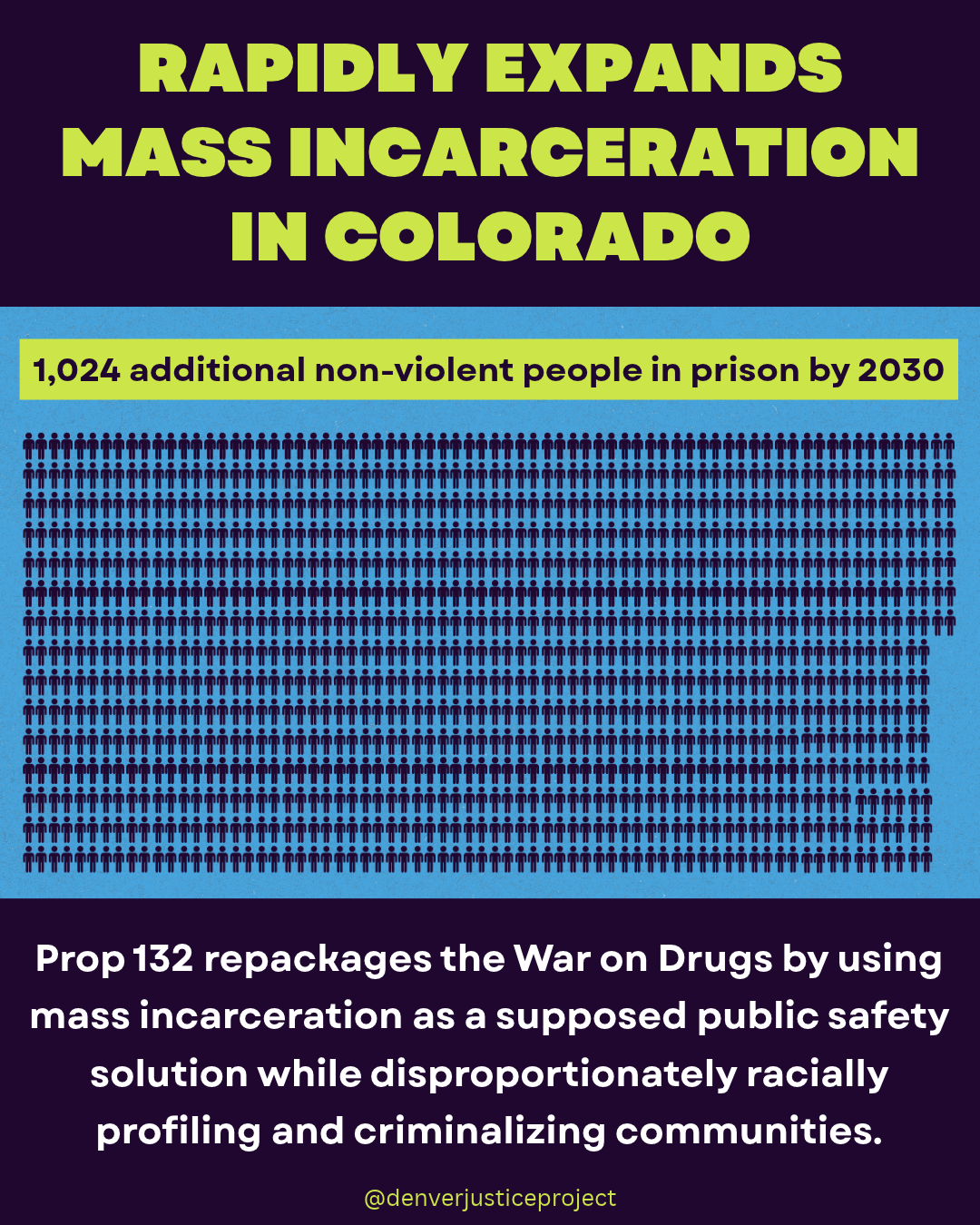
More people in cages. State analysts estimate Prop 132 would add about 1,024 people to Colorado prisons every day by 2030. Prison separates people from their families, jobs, and support networks, which makes recovery even harder.
A huge bill for taxpayers. Building new medium-security prison space costs about $412,500 per bed. That could add up to $422.5 million in construction costs alone, money that would come out of the same budget that pays for schools, healthcare, and public transit.
And for all that money, Prop 132 does not invest one dollar in treatment, recovery services, housing, or overdose prevention.
Follow the money
Prop 132 was put on the ballot by Advance Colorado, the same political group behind Amendment 81. Advance Colorado has received funding from CoreCivic, one of the country’s largest private prison corporations, according to Who Is Advance Colorado.
Here’s how it works:
- A private prison company helps fund Advance Colorado.
- Advance Colorado pays signature gatherers to put Prop 132 on the ballot.
- Prop 132 sends more people to prison for longer.
- Colorado needs more prison beds, and CoreCivic, which already runs two private prisons in our state, stands to profit.
This is what mass incarceration has always been: a system that turns people into profit. We want our tax dollars invested in our communities, not in private prison contracts.
What real solutions look like
A public health crisis needs public health solutions. Harsh sentences don’t touch the root causes of substance use: housing, trauma, job security, and access to treatment. Here’s what actually helps:
- Invest in housing, schools, living-wage jobs, and health and mental health care.
- Fund peer support, recovery services, and programs led by people with lived experience.
- Expand naloxone, overdose prevention education, and non-police crisis response.
- Make treatment affordable, accessible, non-carceral, and available when people need it.
Here’s how you can help:
- Vote NO on Prop 132 and return your ballot by Tuesday, November 3.
- Talk to five people in your life about why you’re voting no.
- Learn more from the Colorado Criminal Justice Reform Coalition and No on 132.
- Support DJP so we can keep bringing our communities the resources to fight injustice.
Care, not cages. Vote NO on 132.
Sources